How Sanctuary Family Medicine Found the Perfect Richmond Location: A Commercial Real Estate Success Story


Sanctuary Family Medicine hired reRVA to find them a space for their new medical office in Southside Richmond. We visited to see how they’re doing after the move-in, get a tour, and ask questions about the commercial real estate search process.
Patrick: You’ve lived in and practiced medicine in Richmond for years, from working at Southside clinics to leading health programs across the city. What makes Richmond, and specifically the community where Sanctuary Family Medicine is located, the right spot for this next chapter?
Mark: We recognized a gap in Richmond: many in the Latino community lack easy access to primary care—especially in Spanish. Some don't have insurance through work or are locked out of the marketplace due to immigration status, and other safety-net clinics are jammed to capacity.
Other working families don't qualify for free clinics because their income is too high, yet they can't afford regular cash-pay visits.
We wanted to stay close to the Latino community, so Southside was the spot. We're right near Midlothian—a major business hub for the community—and right off the highway, making us accessible from the West End or downtown. We’re no more than 15 to 20 minutes from almost anywhere in Richmond, giving Spanish-speaking families easy access from all over town.
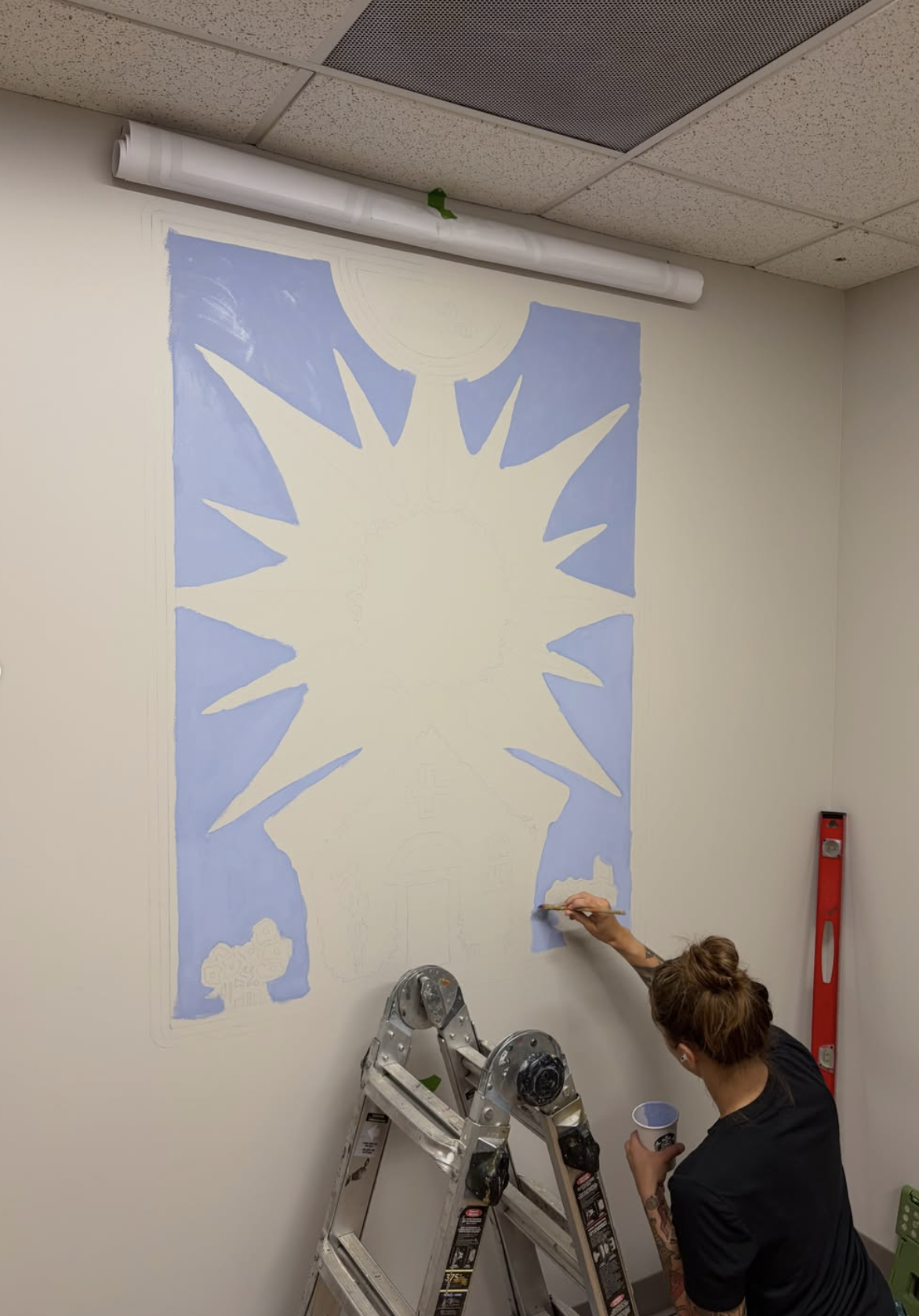
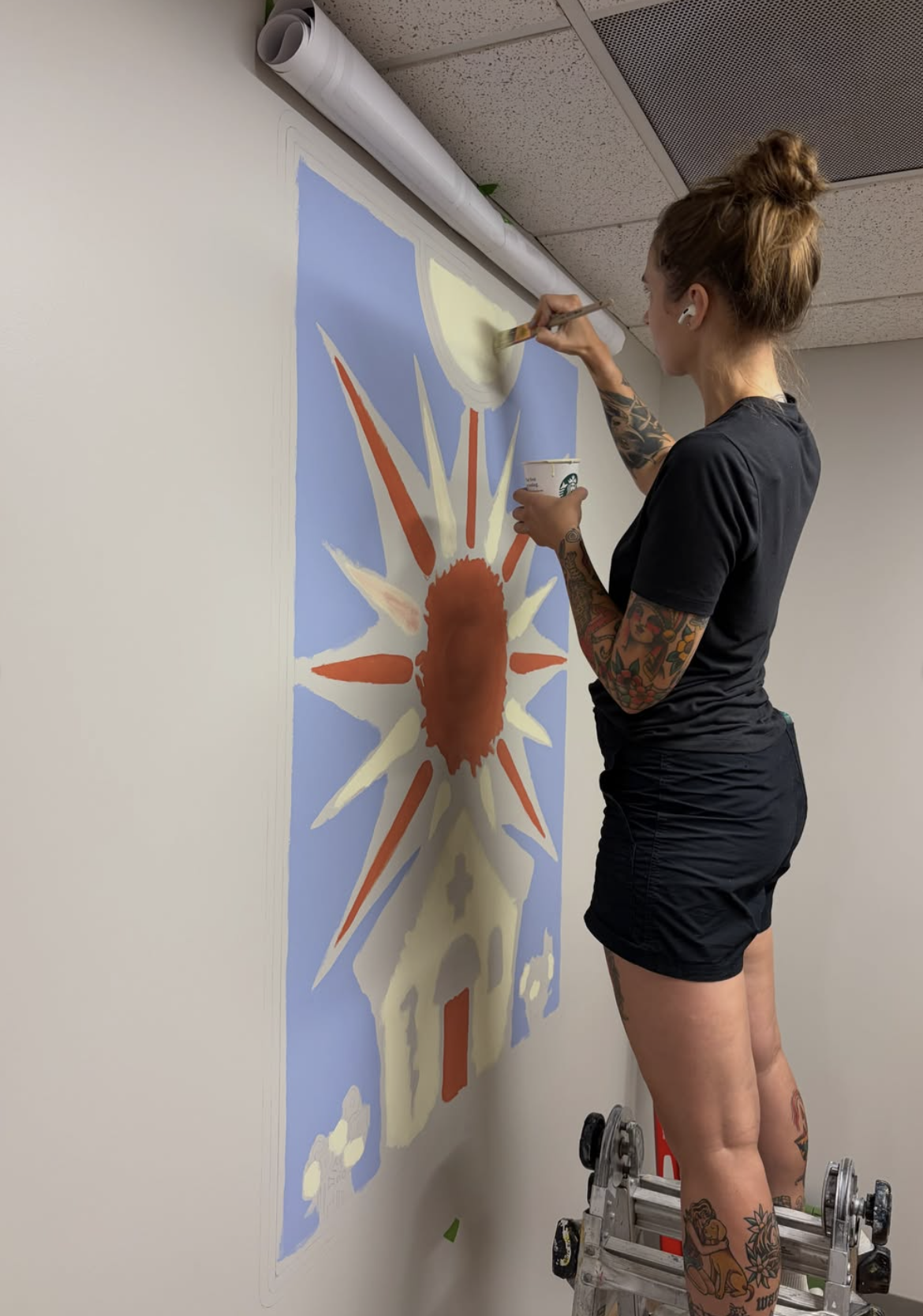
Pictured Below: “Sarah of @lucky_signs helped us make the office feel much more like home!”
Patrick: Healthcare can feel overwhelming and transactional these days. How does the model at Sanctuary Family Medicine change the doctor-patient relationship for RVA residents?
Mark: We wanted to be a safe, comfortable, protective space outside of the traditional system that valued the person above all else. The importance of a therapeutic relationship, I think, is a real thing. I taught on it. I believe it. So, we built a space that allowed us to have that therapeutic connection.
Sanctuary Family Medicine is located conveniently between Chippenham Parkway, Powhite Parkway, and Midlothian Turnpike.
Patrick: Launching a new medical practice is a massive undertaking. When you sat down to envision Sanctuary Family Medicine, what were the absolute 'must-haves' for the physical space to make sure patients felt safe, welcome, and cared for?
Mark: We wanted at least two exam rooms so we could work out of both as we grew or if we brought on another clinician, avoiding a move down the road. We also needed a small pharmacy space and a break area, nothing enormous.
Accessibility was key, both in location and physical space. Parking is right outside, making it easy for folks with wheelchairs or mobility issues.
Inside, we wanted a warm, comfortable, homey space that felt personal, not sterile. Unlike other clinics with quiet music and granite countertops, we chose comfortable chairs and a layout focused on conversation, and the person. It’s not fancy, but it’s genuine, colorful, and reflects our personality so people feel right at home.

Mark is awarded a plaque from The El Paraíso Community School with the Altos del Paraíso Community in the Dominican Republic. It reads:
Where others see difficulties, you see people. Where there is need, you put your heart into it. Thank you for being our doctor, our fighter, and our pride in Altos del Paraíso.
In every visit, in every gesture, you prove that medicine with humanity is the most powerful.
Given in the Dominican Republic on January 29, 2026.
Patrick: Finding commercial space in Richmond—especially for healthcare—comes with a lot of hyper-specific needs like layout, accessibility, and zoning. What surprised you most about the real estate search process when you and Patrick started looking?
Mark: We gained a bigger, better awareness than we had individually of what properties were not worth pursuing and what properties were worth taking the time to look at. We had a couple of options, and in hindsight, they were probably pretty terrible. Patrick helped us figure out where we could focus our energy. It was much more efficient, and the places we looked at were much more ready to go. When we walked in here the first day, we could have started working right then. The amount of construction required and the amount of upfront work was very minimal. I always wondered how much Patrick did behind the scenes, because it seemed like it was too generous or too good an offer to start with. The construction, flooring and paint was done at no cost to us. It made our barrier to entry much, much lower than it would have been. It was very reassuring to have somebody who knows their way around and who could tell us, like, “This seems like a good deal,” “This seems like a good place,” or “This company's reputable.” Like, I would have no radar for that.
Patrick: For other local healthcare providers or entrepreneurs looking to establish a brick-and-mortar presence in Richmond, what’s one piece of advice you’d give them about taking that leap?
Mark: Finding Patrick six months earlier. We just didn't have the bandwidth to find all of the properties that were out there or to have the connections or the tools to be able to find properties. Yeah, we probably wasted quite a bit of time before we got Patrick involved. As he joined us, we had settled on this property and signed the papers with him in like a month. It was very fast. There was some details to fine tune in the offer, but there was no poison pill. I kept looking for the poison pill. Didn't find it. Since we weren't part of (the deal negotiation), it was also great that we didn't have to be part of it. He came to us with something that was just about ready to go. Patrick joined us in March. So we'd had at least 3 or 4 months of just kicking around and we weren't at a panic point, but we were starting to get to like, “We want to open in 4 months. We really do need something.” We might have made a decision to take on a project that would have been a much worse opportunity. His help let us get in here on July 1st, ready to go.
To learn more about, or connect with Sanctuary Family Medicine, click the image below to visit their site.